

Introducing "Code-switching with"
In the first of a new interview series, I speak with Marseille-based Indian chef Zuri Camille de Souza about the nine languages she has collected across three continents.

Welcome to “Code-switching with” a new series of conversations with multilingual creatives on language, identity, and expression. From now on, it will land in your inbox alongside my monthly Beyond Words letter, which compiles linguistic news from around the world. You can read the latest one here. The name of this series comes from a concept in linguistics: code-switching is the practice of shifting between languages, dialects or speech styles within a single conversation. It’s common in multilingual societies and communities, and many of us do it all the time without even realising it.
In my work as a freelance journalist I regularly meet interesting, creative polyglots, but their thoughts on language rarely make it into whatever it is that I’m writing — even though it often shapes their lives in significant ways, and can offer a fascinating window into their minds. This series is a space for those conversations. I hope you enjoy it.
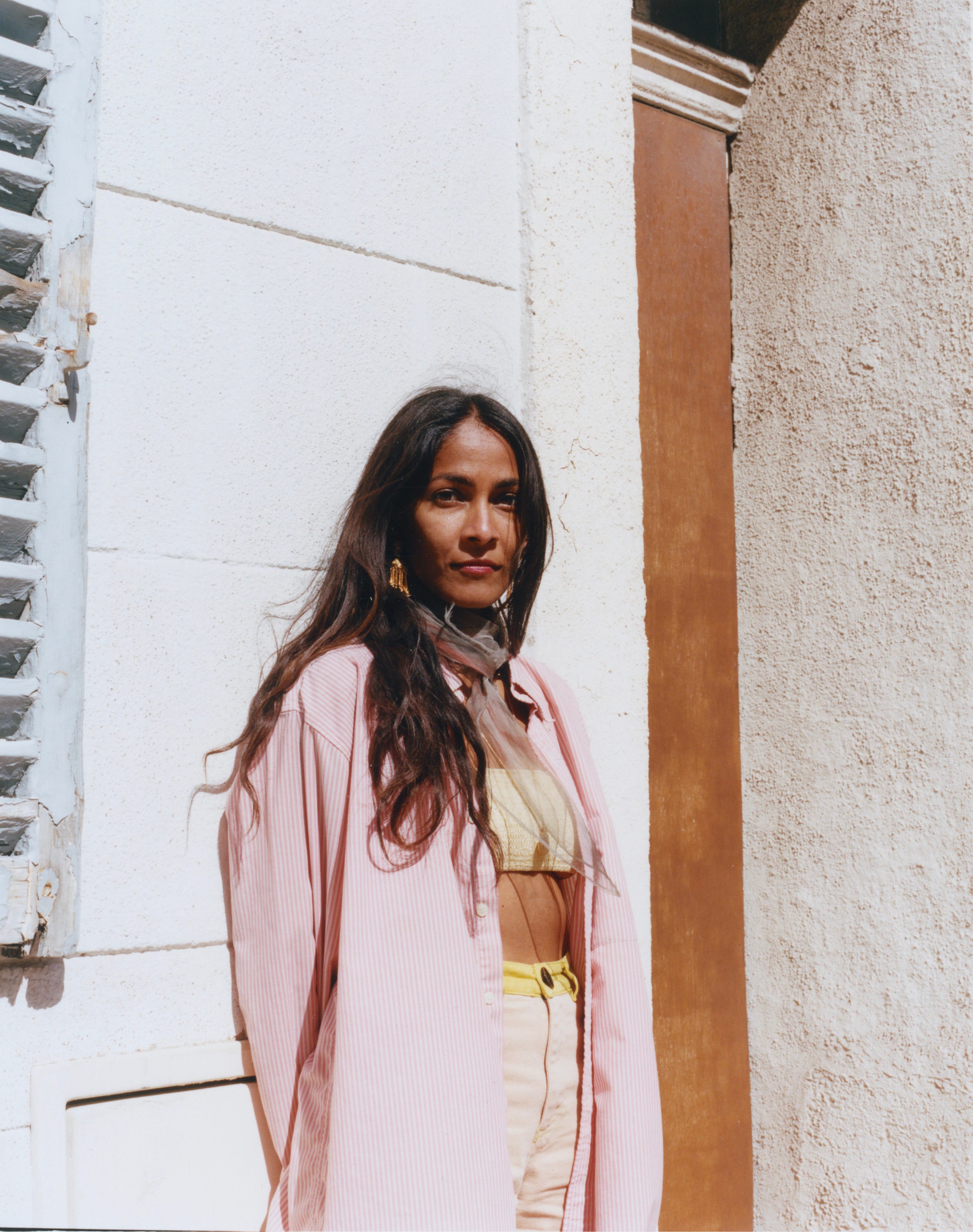
Code-switching with Zuri Camille de Souza
The Marseille-based chef on Marathi, Konkani, French and the role of English in bringing people together
Zuri Camille de Souza is an Indian chef based in Marseille. Born in Goa and raised in Pune, she studied Human Ecology at a liberal arts college in Maine before starting her career in fashion in Mumbai. Seven years ago, she settled in the Mediterranean city with her French boyfriend, and her passion for food eventually led her to pivot careers. In 2020 she launched Sanna, a lunch delivery service inspired by Mumbai’s centuries-old dabbawala lunchbox system, and the simple, comforting dishes she posted on Instagram and delivered by bike quickly found loyal customers.
Since then, the itinerant chef has made a name for herself with her Indian plant-based recipes centered on local produce and seasonality. In 2022, she became the first chef in residence at the Villa Medici in Rome, France’s top art residency program, and in 2024 she published her first cookbook, Là où le riz sent les fleurs de manguier (There Where The Rice Smells Of Mango Blossoms). Recently, her cooking has led to a pop-up at Marseille institution La Mercerie, a residency at Chardon in Arles (where she will be in April and May), and taken her to the Bukhara Biennial in Uzbekistan and the Kochi-Muziris Biennale in Kerala.
I met Zuri on a sunny winter day in Marseille and, although we were there to talk about food (I was lucky enough to taste her signature beetroot confit lemon dip and coconut milk curry), I was immediately intrigued by her relationship to the many languages coexisting in her brain. In our follow-up conversation, we spoke about the complicated definition of ‘mother tongue’, the influence of Portuguese on Marathi — the official language of Maharashtra — and the power of English to bring people together. Paid subscribers can also listen to a voice note in which Zuri teaches us a few useful phrases in Marathi.
First of all, how many languages do you speak?
I speak English, French, Italian, Marathi and Hindi in that order of fluency. I can read and write Kannada, understand Konkani, and can read, write and understand Levantine Arabic and Spanish, although they are quite rusty!
How did you learn them and when and where do you speak each one?
The first language I spoke was Konkani, and I learnt it because I was born in Goa and because it is spoken by the Goan side of my family. I learnt English from my parents, who spoke English with each other; Kannada and Hindi in school, and Marathi with my family. I learnt Italian whilst on a residency in Rome for a year at the Villa Medici, and Arabic formally whilst working in Dubai, but in practice while doing research work in Palestine. I studied Spanish in high school and also have friends from all over Latin America.

Which are your ‘mother tongue(s)’? And do you have any thoughts on the term ‘mother tongue’?
This is a complicated question for me because I have a neural relationship with languages that is very relative and specific to where I might be. I grew up hearing at least three different languages at the same time. My father was born and raised in Kenya and spoke Swahili with my paternal grandmother; my parents spoke English with one another — that was their common language. My mother speaks Marathi with my maternal grandparents, but we also speak Hindi with the maternal side of her family that lives in Bombay and Delhi. Her mother is from a Marathi family from Bombay, but Hindi is commonly spoken in Bombay too, and, to make it more complex, it is a different version than that spoken in the north of India! So I don’t think I really have a mother tongue besides English in a certain sense…
What is your favourite word in Marathi? And in French? What about in Italian?
I really enjoy the way people make nicknames in Marathi by adding “-ya” at the end of a word. My ajoba (maternal grandfather) would do this for his pets, and it made for some amusing names. He called every single dog he ever owned Tommy or Leo, except it was always Tomya or Leoya. In French, I like the word retrouver because it evokes the act of finding something or someone once again, which I find reassuring. I don’t have a favourite word in Italian, but it’s the sound of the Roman accent that I really like, as well as the Neapolitan accent and the way the ‘ch’ sound becomes so thick.
Do you mix your languages in daily life? How?
